
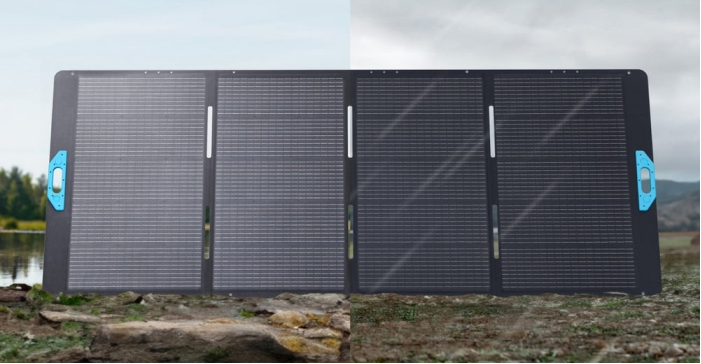
Solar panels convert sunlight into usable electricity through a chain of tightly coordinated processes that begin at the atomic level. The transformation starts when photons reach semiconductor materials inside each cell and trigger the movement of electrons. Panels then route that flow through wiring, inverters, and energy systems that make the electricity safe for home or portable use. A model like the Anker SOLIX PS400 Portable Solar Panel shows these principles in action. With its high conversion efficiency and adjustable angles, it demonstrates how design influences production. Understanding these fundamentals helps homeowners evaluate panels solar home systems more confidently and clearly.
How Photons Create the First Spark of Electricity?
Semiconductor Materials Enable Electron Movement
Solar cells rely on semiconductors, most often silicon, because they balance conductivity and resistance. When sunlight strikes the cell surface, photons transfer energy to electrons bonded inside the silicon lattice. That added energy frees some electrons, allowing them to move. Manufacturers engineer the cell with two layers—a negatively charged top and a positively charged bottom—to create an internal electric field. This field forces freed electrons to travel in one direction. The PS400 panel uses monocrystalline cells, which provide a uniform structure that supports efficient electron flow. Observing its strong output during peak sunlight helps users understand how effectively engineered materials amplify the initial photovoltaic response.
Electrical Contacts Capture and Direct the Charge
Once electrons begin moving, the panel must capture them through a network of metallic contacts on the cell surface. These grid-like lines gather the electrons and channel them into conductive pathways. From there, wiring routes the emerging current through the panel array. This current is direct current (DC), which means electrons flow in one steady direction. Portable panels such as the PS400 come with MC4 connectors designed to move DC power safely into a compatible device or power station. Watching a portable station charge consistently from the PS400 highlights how the capture-and-transfer system maintains energy flow even when light conditions vary.
Panel Architecture Determines How Cells Work Together
Solar panels combine many cells wired in series and parallel to increase voltage and current output. Series wiring raises voltage, while parallel wiring increases current. Manufacturers tune the configuration to meet predictable performance standards. A well-structured panel prevents weak cells from compromising the entire module. The PS400 demonstrates this principle by maintaining strong charging capacity even if one section receives slightly less light due to angle or temporary shading. This resilience is especially useful when homeowners assess how rooftop or yard installations might perform under real-world conditions. The architecture ensures stable energy production instead of erratic surges or drops.
How Raw Solar Energy Becomes Usable Electricity?
Voltage Regulation Ensures Stable Output
Raw DC voltage fluctuates based on sunlight intensity. To make the electricity usable, panels rely on voltage regulation components. Many systems use charge controllers that stabilize and condition the output to protect batteries and power stations. Observing the PS400 charging a compatible device shows how effectively the panel maintains consistent energy delivery throughout shifting light levels. Voltage stability matters both for portable use and larger residential systems. Without regulation, power could spike in midday sun or dip sharply under passing clouds, risking device damage. A well-designed panel-and-controller combination eliminates those risks and maintains a clean, stable current.
Inverters Transform DC into AC for Household Use
Most household appliances operate on alternating current (AC), not DC. That means rooftop solar systems require an inverter to convert the electricity before it powers anything inside the home. Homeowners rarely see this process directly, but the experience of using a portable panel with a power station offers a scaled-down example. The PS400 supplies DC to a power station, and the station’s internal inverter creates AC power for devices. This mirrors residential solar workflow: cells harvest DC, system components refine it, and the inverter finalizes the transformation. Reliable inversion ensures lights, appliances, and tools operate exactly as expected.
Optimal Panel Positioning Maximizes Photovoltaic Efficiency
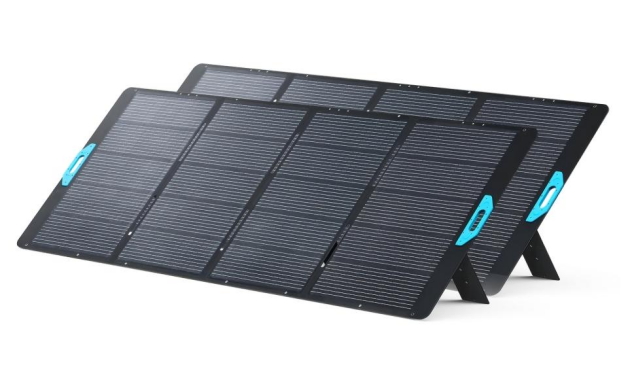
Even the best cell architecture relies heavily on physical placement. Sunlight angle, shading, roof pitch, and orientation all shape production. Portable panels make this easier to visualize because users can adjust them manually. The PS400 includes four preset tilt angles—30°, 40°, 50°, and 80°—to maximize absorption. Experimenting with these angles demonstrates how dramatically orientation affects output. Homeowners can use this insight to determine the best rooftop alignment or to understand why production dips at certain times of day. Good positioning ensures that the photovoltaic process reaches its maximum potential and converts the highest percentage of incoming photons into usable electricity.
Conclusion
Solar panels convert sunlight into usable electricity through a coordinated series of scientific and mechanical steps. Photons energize electrons inside semiconductor cells, electrical contacts route the flow, and the panel’s architecture stabilizes output. The electricity then moves through regulators and inverters that make it safe and compatible with everyday household devices. Portable models such as the Anker SOLIX PS400 Portable Solar Panel provide a clear, hands-on view of how efficiency, tilt angle, and material quality influence performance. By understanding these conversion principles, homeowners can evaluate solar systems more effectively and make informed choices about future rooftop or portable installations that match their energy goals.